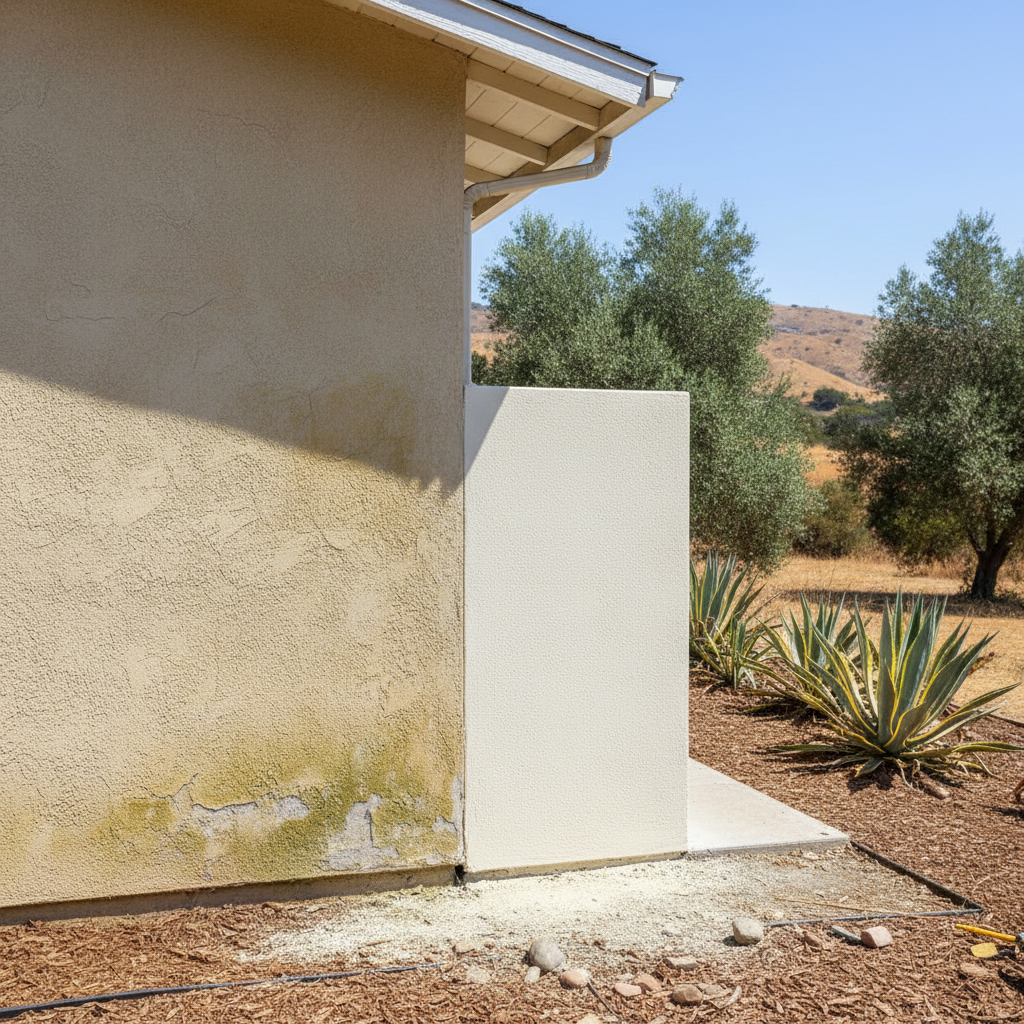
Thinking about new stucco for your house? Smart move. Stucco's a classic for a reason, especially out here in Southern California. But when you start digging into it, you'll quickly realize it's not just one thing. You've basically got two main paths: traditional cement stucco or what most folks call synthetic stucco, also known as EIFS.
Now, I've been in this business a long time, and I've seen both types go up and truly last — or not. So, let's talk straight about what each option offers for your Claremont home.
Traditional Stucco: The Old Reliable
This is probably what pops into your head when you hear "stucco." It's cement-based, usually applied in three layers over a wire lath and building paper. You've got your scratch coat, then the brown coat, and finally the finish coat. It's been around for centuries, and there's a good reason for that.
Toughness: Traditional stucco is durable. Seriously tough. It's basically a hard, rigid shell that can handle the sun, wind, and even the occasional rogue soccer ball. It resists impacts well and holds up incredibly through our dry, hot summers and those heavy winter rains we sometimes get.
It Breathes: This is a big deal. Traditional stucco lets air through. It allows moisture vapor to pass, which is super important for stopping mold and rot behind your walls. In a place like Claremont, especially in those older homes up by the colleges where drainage might be a bit tricky, this breathability is a huge plus.
Price Tag: Generally, traditional stucco can take more labor to install because of all the coats and the time it needs to cure. So, the initial cost might be a little higher than synthetic, but its long life often balances that out.
Upkeep: Pretty low maintenance. Just keep it clean, fix any cracks that show up (and they will, it's a natural material, after all), and you're set. Repainting is always an option later if you want to change the color or just freshen things up.
How It Looks: It has that classic, solid, masonry feel. You can get all sorts of textures, from super smooth to a sand finish or even heavier dash finishes. It just looks substantial, doesn't it?
Synthetic Stucco (EIFS): The Modern Choice
EIFS stands for Exterior Insulation and Finish System. It's a multi-layered setup that usually starts with a foam insulation board attached to the wall, then a base coat with a fiberglass mesh embedded in it, and finally a finish coat. It's a completely different animal.
Toughness: EIFS is also durable, but in a different way. It's more flexible than traditional stucco, so it's less likely to crack from small shifts in your home's structure. However, it doesn't handle impacts as well. A sharp hit can dent or puncture that foam layer underneath, which then needs fixing.
Insulation: This is EIFS's main selling point. That foam board provides excellent insulation, which could mean lower energy bills for you. Here in Claremont, where the AC runs constantly in the summer, this can be a real advantage.
Price Tag: Installation can sometimes be quicker, which might mean slightly lower labor costs. But the material costs can sometimes cancel that out. It's often priced similarly to traditional stucco.
Upkeep: Similar to traditional, but you really need to watch out for damage. If water gets behind EIFS through a puncture or a bad seal, it can cause big problems because the system doesn't breathe as well. Proper flashing and sealing are absolutely critical with EIFS, no two ways about it.
How It Looks: EIFS can imitate almost any texture and color of traditional stucco, often with a more uniform look if that's what you're going for. You can achieve some really smooth, contemporary finishes with it.
So, Which One Should You Pick?
Look, both traditional and synthetic stucco have their place. If you're building a brand-new, super energy-efficient home and you're confident your installation team can seal everything perfectly, EIFS is a strong contender, especially for its insulating power. It's lighter, too, which can be a factor for some structures.
But for most homeowners in Claremont, especially if you're renovating an existing home or just want the most robust, time-tested exterior, I'm going to lean towards traditional cement stucco. Its natural breathability is a huge advantage for managing moisture, which is always a concern, even in our dry climate. The impact resistance means it can handle the wear and tear of family life better, and its long-term durability is just unmatched.
You'll see traditional stucco all over town, from the classic Spanish-style homes to the mid-century ranches. It's proven itself here. At Majestic Stucco, we've installed and repaired countless traditional stucco systems, and we know how to make sure it's done right so it lasts for decades. You really can't go wrong with the classic.